
Having read with great interest the articles here about the development of federalism in the United States of America, I thought that a comparison with the development of European federalism would complement these articles, comparing the development of the European Union with that of the American federation.
I will first declare my allegiance and political persuasion. I am an English Tory, who lives in Wales. I share the belief with the neo-federalists that power is too centralised. Not just within Europe but within the British Union as well (although there is some decentralisation with the Scottish Parliament and the assemblies in Wales and Northern Ireland, England has been left out of this entirely). The developments within the UK are for a different article though as they concern the devolution of power from a former unitary state and not the rebalancing of power between a central authority created by formerly independent entities, as is the case with the European Union and the American Union.
To successfully rebalance power, an understanding is needed as to the nature of the current power structure. What genuine power do each of the entities possess? I am not referring to the constitutional details here, but something more fundamental. The English County Councils could be abolished by an Act of Parliament and there is nothing the councillors could do about it. An incoming Conservative Government could probably legislate away the Welsh assembly without too many dire consequences for central government and its control of Wales. The abolition of the Northern Ireland assembly would provoke protests from the Republic of Ireland government and a return to sectarian violence. An attempt to abolish the Scottish Parliament might provoke a unilateral declaration of independence. Whether the Scottish people and the Scottish regiments of the British army would follow Hollyrood or Westminster in such an event is unclear. They would be probably more likely to follow Hollyrood. However, a unilateral declaration of independence by an SNP government without any provoking action from Westminster may produce a different result. To take this idea further, we should consider what may seem an absurd idea - whether the EU could abolish the British Parliament. If the British Government said no, there would be no way the EU could enforce such an action. The EU could not prevent a British breakaway from Europe by force but there is the issue of the economic consequences of a withdrawal – this needs to be analysed in depth and a simple conclusion for an introductory section is not possible. This power over Britain is still very real however. It is clear that we have a range of real power in the smaller units of government from the virtually powerless to a situation where there is real division of power.
The issue of where real power lies is deeply tied up with ideas of identity and legitimacy of government, economic power and military power. In both the American and European Unions, real power has shifted to the central authority, not merely the consensual sharing of decision making. In order to understand how it may be possible to reverse this process, it is necessary to analyse how this situation arose and the real power structure, including the strengths and weaknesses of the constituent bodies. It is easy to see how the English county councils have little power and likewise the Welsh assembly - both were created by statutes of the Westminster Parliament, but what about the transfer of power between formally sovereign bodies?
In this first article, the development of the European Union will be discussed.
Different perspectives on the European Federalism
It will of course be necessary to do this from two very different perspectives, British and Continental. Many people outside of the UK will not appreciate just how controversial what I have written in the first paragraph is. The EU aim of a federal European state is widely recognised on the continent, even if disliked by more people than the powers that be would like to admit. In this island, the federal aim is political dynamite and a massive factor in the fall of the last Conservative Government. Pro-Europeans will usually deny that a federal super-state is the objective and will dismiss Euro-sceptics warnings about a super state as paranoia. The “official” line touted by the current Government and that of John Major is that we haven’t given up sovereignty. It is of course an absurd notion and in the light of the recent European election results in which the United Kingdom Independence Party (UKIP) attained second place behind the Conservation, clearly not one believed by the British people.
The European Union is in many ways the Federal ideal turned upside down. There is indeed a division of power, but very different from that in the USA. The British army soldiers fighting in Afghanistan are not there under the orders of the EU. They were sent by the British Government and are fighting as part of NATO. On the other hand, the weights and measures used in my local supermarket and conditions under which I work are laid down by European regulation. A strange type of federation indeed.
So we have a situation where the government of one of the largest states in the Union denies that a federal state exists and an upside down federation where low level decisions about the minutiae of people’s lives are determined at the centre, but matters of war and peace are decided by the member states. It would be as if the Governor of Texas claimed that Texas had the same independence as it did before 1845 and as if New York state sent troops to fight abroad without consulting the Federal administration. How did this situation arise, what are consequences and what are the lessons to be learnt by neo-federalists from the current structure of the European Union?
Origins of the European Union
The origins of the EU lie, like those of the American Union, in war and the chaos it brings. Here the similarities end. The American colonies were dealing with the problems of a successful rebellion against a common enemy. The fledging EEC was formed from defeated nations who had been fighting each other. The core of the European Union is based on the Franco-German alliance, which stemmed from a determination not to repeat the mutually disastrous wars fought between those 2 countries in the first half of the 20th century. Two once proud imperial nations had been reduced to starvation and ruin, dependent for survival on the generosity of the USA.
In his first paper, “Octavian” states that the powers of the Federal Government in the USA were the result of an overreaction to the conditions of perceived anarchy after the war of independence. In the same way, the development of the EU can be seen as a reaction to the conditions in Europe after World War 2. The powers of the EU, the attitude of the continental states and the attitude of the British people towards Europe can all be traced from the 1939-1945 conflict. It is worth looking at the situation in more detail.
The European project began with the European Iron and Steel Community, established by the Treaty of Paris in 1951. The principal industries needed for the waging of war were thus to be jointly controlled by France and Germany. The aim was, in the words of Robert Schumann, the French Foreign Minister (later prime minister) who proposed the concept, “to make war not only unthinkable but materially impossible.” The next stage was the creation of EURATOM, the pooling of nuclear power resources. The European Economic Community was properly founded by the signing of the Treaty of Rome in 1957, with six member states (France, Germany, Italy, Belgium, Netherlands and Luxembourg). This introduced the freedom of movement of labour and capital and the common agricultural policy. The latter was aimed at making the EEC self-sufficient in food and was a reaction to the starvation in Europe during and immediately after the second world war. The EEC was further developed by the single market (1986), the Maastricht treaty (1992) and the treaty of Amsterdam. What started as economic cooperation has become a fully functioning federal state.
Great Britain and Europe
British attitudes towards Europe have always been ambivalent. Winston Churchill once famously said that if England had to choose between Europe and the open sea she would always choose the open sea (Europhiles who claim that Churchill favoured a “United States of Europe” fail to point out that he never considered that Britain should be part of it!). A very large number, probably the vast majority of the English, the Welsh and the Northern Irish protestants would agree with this sentiment (opinion in Scotland is generally more favourable towards Europe). How come then that the United Kingdom became involved in the European venture?
Once again we have to go back to the events of the second world war and in particular 1940-41. In this short period, British world power, weakened by economic decline, the financial disaster of world war 1 and the loss of a generation in the trenches of Flanders, finally collapsed. 1940 marked the end of Britain’s truly independent role in world affairs.
1940 for Britain is the most misunderstood of years. Britain was not as militarily unprepared as the popular imagination believes. After the fall of France, all that stood between Britain and invasion was the world’s most technologically advanced air force and the world’s largest battle fleet. Without for one moment wishing to take anything away from the bravery of the RAF pilots in the Battle of Britain, the odds against them have been exaggerated – the defences of Britain were certainly up to anything Nazi Germany could throw at them (with the exception of the U-boats and this is related more to the problems of supply and production than direct military assault). So where did the problem lie? It was simple. Britain was bankrupt. The economy simply couldn’t cope with the stress of war. It is no use having the best fighter planes if there is no fuel to power them or if your population is starving. In 1940, this economic weakness gave the British establishment a stark choice – become a client state of America or of Nazi Germany. Fortunately for humanity, they chose the former (although there were plenty in the top ranks of British society who would have preferred the latter – this issue and the related ones of the abdication crisis and the Hess flight to Britain in 1941 are fascinating subjects, but somewhat off topic).
How is this relevant to the development of the European Union? The legacy of World War 2 for Britain was a dangerous combination of strategic weakness, a dire economic plight and illusions. The British people believed they had won the war. They believed that growing British power had played a large part in the combined victory and that Britain, with its empire, was a world great power. In reality of course, the British armed forces which played a large role in the liberation of Europe were not a manifestation of British, but of American power. Even if more than half the troops landing on D-day were from the Empire, it was American finance and industry which equipped and supplied them.The problems that Britain faced in 1940 were not threats which could have been dealt with if we had properly prepared, they were the result of fundamental weaknesses of the British Empire. A large part of the British establishment and the British people would not accept reality.
The performance of the British economy however could not be ignored and the end of the British Empire was plain for all to see, especially after the debacle of Suez. Membership of the EEC was in many ways a most conservative solution to the problem. The British establishment saw joining an economically successful club as a straightforward way of solving Britain’s economic problems. The political role it saw was as a bridge between the USA and Europe. Britain’s entry into Europe was therefore fundamentally different from that of most of the early members. Its aim was to improve the economy and maintain our world standing (especially our relationship with America, which was favourable to British membership as it would be a counter to Gaullism in France), rather than with the view of the development of a Federal Europe.
It was the economic benefits which were sold to the British people in the referendum of 1975. We were effectively told we were joining a free trade association, albeit with a few extras thrown in such as the common agricultural policy. However, apart from the benefits of free trade and a small membership fee, there would be no surrender of sovereignty. It is a mantra that has been repeated down the years as more and more decision making has been transferred to Brussels. Every effort has been made to cover up the federalist intent of the EU, even to the extent that John Major sacrificed much of his bargaining position at the Maastricht treaty negotiations just to get the word “federal” removed from the treaty and replaced with the words “ever closer union”. Not much of a concession, but important if you are building a centralised state by stealth.
And stealth was used, gradually transferring power, but in a way that was never honest. A federal union has been built starting with iron, steel and agriculture, followed by competition policy, social legislation, industrial policy and then moving on to monetary union. Where stealth failed, bullying was used. The mantra that integration was “inevitable” was frequently used. Where countries voted against EU treaties, they had further referenda with minor changes, such as with Denmark in 1992. A strange and imbalanced union has developed as a result, with some of the most minor decisions for government made at the highest level. Just as the excessive power of the centre in the USA was the result of an overreaction to the problems of the immediate aftermath of independence, the power structure of the EU is the result of the need to create a union by stealth.
Read more...
Showing posts with label Federalist theory. Show all posts
Showing posts with label Federalist theory. Show all posts
Friday, October 30, 2009
Thursday, June 11, 2009
The Federalist Dilemma part 3: the price of complexity
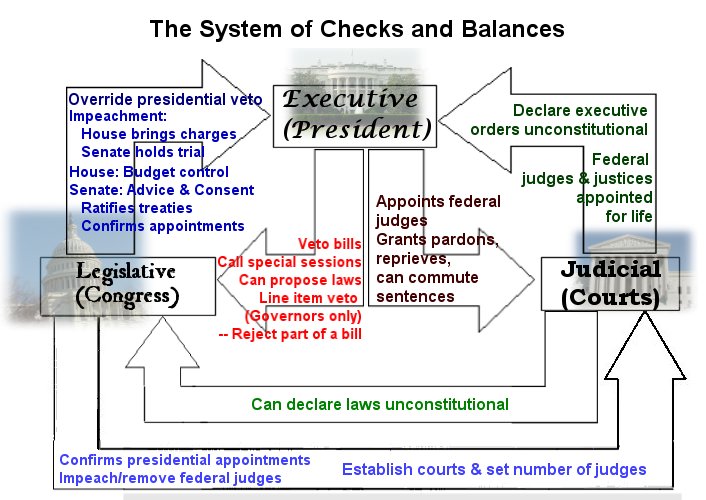
At this point, a summation of previous points might be in order. As I see it, there are at least three major flaws in the traditional concept of federalism. First, far from uniting the American colonists into a nation-state, the war for independence created thirteen separate and competing identities incompatible with national governance [1]. Second, the fact that federal institutions were modeled on the British system ensured that mechanisms of checks and balances would fail to operate, allowing the central government to decide for itself what it could and could not do [2]. Third, the use of complexity as a substitute for distinct social classes has actually distorted public perceptions of institutional responsibility. This particular problem will be the focus of today’s topic.
With the central authority in these States United balanced between two amorphous national parties, the complexity and overlapping jurisdictions of the federal system disguises the true source of particular decisions. As Machiavelli points out, “[g]enerally, [people] judge by the eye rather than the hand, for all […] can see a thing, but few come close enough to touch it” [3]. There is a regrettable truth in these words. Very few people have the time, money or patience to grapple with the nuances of policy-making at the federal level. As a consequence, the average American citizen must rely on political slogans, sound-bites, and party talking points for information on the behavior of central institutions. This provides a highly malleable atmosphere in which unpopular decisions or abuses of power can be imputed to one branch or another, burying culpability beneath an avalanche of parliamentary rules or arguments over executive privilege and national security. Federal legal codes alone are so complex that even trained experts in the field have trouble explaining it to the public in a digestible form.
In such a context, only professional bureaucrats, government lawyers, and political power brokers have access to enough specialized information to develop and implement policy. To be sure, the “people” can vote, but so long as they remain in the dark as to what they are voting for, the national government need not fear the ire of the governed. In this way, only those select few which posses the financial means to facilitate a permanent representation of their interests in Washington D.C. (via lobbyists and party donations) can have a meaningful impact on domestic and foreign affairs. And all of the consequences of such influence are funded at the “people’s” expense—that is, the taxes and lives of the vast majority of citizens who have little say in the matter and even less to gain. Bank bailouts, dubious foreign wars, government intervention in the economy, and unsustainable military and welfare establishments, are only possible in an environment where the seat of power is too far removed for its citizens to understand it, let alone control it.
Of course, none of this is unique to the United States. It is, however, quite particular to a specific form of government: empire. Yet, all is not lost. Having recently become acquainted with the consequences of imperialism, the present generation possesses both the incentive and the opportunity to actively reverse this trend. American federalism has within it all the necessary mechanisms and institutions to shift power away from the central government, without having to resort to violence. The focus of the coming decades must be on formulating a practical division of labor between central and local institutions. If the United States are to be reborn, we must re-examine the contemporary approach to American Union; there must be a “new” federalism for a new century.
Read more...


Sunday, June 7, 2009
The Federalist Dilemma part 2: theoretical miscalculations

The creation of thirteen separate states prevented nationalism from playing a major role in the fight for American independence [1]. The legitimacy of state governments over that of Congress was further strengthened by the fact that post-war domestic upheavals had been managed on the local level [2]. Nevertheless, the central government proved fairly adept at prosecuting the war with Britain, resolving interstate border disputes, and hashing-out criteria for the admission of new states into the union. In this sense, a fairly successful division of labor had developed between domestic and central institutions under the Articles of Confederation.
Yet, one of the major problems with this arrangement was that the American union had essentially been a war-time alliance. And as it has been with most political associations of this sort, the removal of a common threat dampened enthusiasm for common commitments and policies. In other words, the true implications of separate American identities became apparent with the defeat of British forces. The states began treating Congress as an obstacle to their interests, even going so far as refusing to send it money or delegates. Issues of individual state tariffs, unstable paper currencies, and the undermining of international treaties made it difficult for American diplomats to claim to speak on behalf of a united confederation.
From the Federalist perspective, the weakness of the central government was threatening to recreate the destructive interstate relations of Renaissance Italy and 18th century Europe [4, 5]. The early instability of the new system had reaffirmed their belief that humans were inherently selfish and violent. Because humans constituted the machinery of states, their institutional representatives are equally self-centered and dissembling. What was needed was a strong central authority that could bind the separate state interests into a uniform national identity
This was a radical departure from union and should be treated with more suspicion than it is today. As I pointed out in a previous article, national institutions are often used to coerce or persuade diverse populations to accept particular policies; usually to the benefit of specific interest groups [8]. Central governing bodies are able to override local institutions, forcing the collective wealth and military potential of the entire population in a single direction. In other words, national governments are often the tools of empire.
Federalists attempted to ease suspicions over the potential power of the new central government by dividing its authority between three separate institutions. Unfortunately, these mechanisms of checks and balances were borrowed from the British model; a system that required the existence of distinct social classes. For instance, a hereditary monarch was head of state; the upper house of Parliament (House of Lords) represented the nobility; the lower house (House of Commons) represented the moneyed interests. Because these groups were “formally and permanently separate,” each institution had built-in incentives to check the power of the others [6].
In America, however, no such social distinctions existed. There were no monarchs or titled nobility. Land and business opportunities were freely available to anyone with the skills to make use of them. To be sure, there were certainly differences between rich and poor, but with no social barriers preventing an individual from acquiring or losing wealth (unless of course you were a slave), anyone could move between the two classes. As a consequence, although federalist theory attempted to emulate the British government (President=King, Senate=Lords, House of Representatives=Commons), the social homogeneity of American society could not make central institutions inherently competitive.
It was hoped that this theoretical problem could be overcome by “[building] into the mechanism of government itself enough variations on election, powers, term of office, and complication of function to create separate interests and perspectives” [7]. This was reinforced by a Supreme Court, which eventually gained the power to nullify the actions of state and federal behavior. Yet, the major flaw in this approach was that it overlooked the actual competing interests in American society: the planters, the merchants, and the states that represented both. In doing so, the increased power of the central government would be used to subjugate excluded social groups and state institutions to the interests of the ruling faction of the moment.
The planters wanted the central government to stay the hell out of the way (no trade barriers, government subsidies, or permanent military establishments). The merchants, however, wanted to utilize the central government to create business-friendly environments both within the Union and abroad (i.e. protective tariffs, infrastructure subsidies, and a strong military to protect trading interests abroad). The states tended to side with whichever of these groups represented the predominant source of economic activity within their borders--a fact that has divided the Union into regional blocs (North vs. South) ever since.
Thus, over the past two and a half centuries, these theoretical oversights have created bitter political battles for federal power (including one civil war). Starting from the emergence of the Federalists and Democratic Republicans, the sole purpose of national parties has been to impede or prevent the operation of federal checks and balances. This is achieved by ensuring that the individuals occupying federal offices are beholden to interests outside of their respective establishments (so-called "party lines"). This in turn prevents federal institutions from developing different perspectives and interests.
Why, for instance, should the Senate check the decisions of the House if a national party has a majority influence in both? Likewise, Supreme Court Justices are appointed by the President and approved by the Senate based on the ideological principles of the party in power. This is not to say that there are never challenges to particular decisions, but it is usually on the grounds of party politics and not, as Federalists had hoped, the result of institutional rivalry. So long as national parties can prevent the operation of checks and balances on the federal level, there is little point in dealing with state and local governments. As a consequence, without serious revision, American federalism will continue to act as a one-size-fits-all policy machine that ignores the local realities of American communities.
Read more...
Tuesday, June 2, 2009
The Federalist Dilemma part 1: post-Revolution identity
I feel I should explain the central argument of my previous post [1]. Because the US Constitution was developed and implemented in an atmosphere of perceived social anarchy, I maintain that the powers granted to the federal government reveal an overreaction to short-term and inevitable adjustments to independence. The fear of political implosion allowed for a hasty centralization of the means of coercion without a realistic mode of restraining that power. In this installment, I wish to discuss the role of identity in post-colonial America and the problems it created for federalist theory.
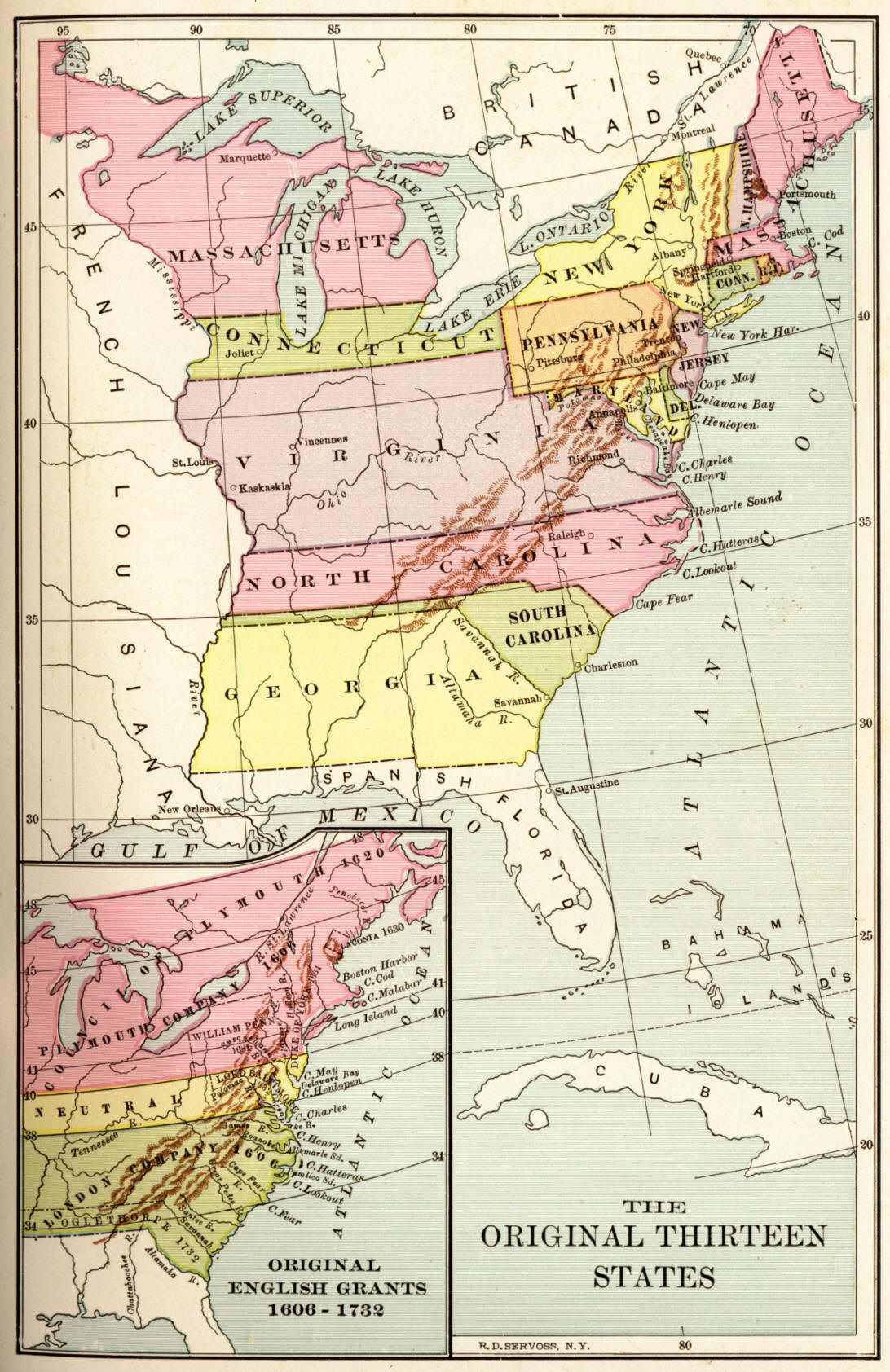
To begin, it must be conceded that the American colonies were ill-prepared for self-rule. While this has stirred many a romantic sentiment for the daring and genius of the founding generation, the identity-crisis that followed independence was responsible for much of the instability of the Articles of Confederation. This is because the only real uniting factor among American colonists was their pride in being British. Much of the early contests with Parliament and initial military confrontations with the British army were justified in terms of standing up for British civil rights. Ironically, the Declaration of Independence and the hasty formation of thirteen sovereign states helped to destroy this unity.
First, the problem with overthrowing a central authority—regardless of the justification—is that it sets a precedent for resisting any new authority structure that rises in its stead. There are always winners and losers when it comes to the establishment of a new government [2]. Almost immediately, the new masters have made enemies of those who benefited from the old. Moreover, those who stand to gain from the new regime frequently offer only lukewarm support—hedging their bets in case the former returns.
Second, with the general social fabric of colonial society shattered into thirteen separate parts, individual and group identities were forced to reconstitute themselves on the local level. Colonists went from being subjects of a single British identity to citizens of South Carolina, Georgia, Massachusetts, etc. Adding to this was the fact that northern and southern states had divergent economic and cultural interests. The social organization of the former tended to center on trade and manufacturing. The latter was organized around agriculture and cheap slave labor. These regional differences created drastically different views on the role of a central government in foreign and domestic affairs.
In sociological terms, the sudden break-down of authority and social identity created an atmosphere of incipient group-information [3]. That is to say, an “us” versus “them” mentality began to develop in each state even before the Revolutionary War ended. State governments and their citizens were drawn closer to one another through their shared experiences during the war and their dealings with other states. In such a context, the physical and psychological separation of each political community—due in large part to the slow travel and communications technologies of the time—allowed state interests to become disassociated from those of the general. As Edmund Morgan writes in his book, The Birth Of The Republic, esteem for the state governments
and a corresponding distrust of the central government was rising all over the country […] as Congress groped its way down the uncharted paths of national government, the state governments were entrenching themselves behind a growing body of legislation. They were in fact so jealous of their new strength that when Congress finally finished tinkering with [the Articles of Confederation] on November 17, 1777, and presented it to them, they were not at all eager to ratify it [4].
Thus, the Treaty of Paris essentially granted independence to thirteen proto-nations that had quickly developed individual narratives for why the Revolution had been fought [5]. This made for a highly unstable and mutually-suspicious political environment not unlike Renaissance Italy or 18th century Europe [6, 7]. In such a context, the best a central authority could do would be to prevent interstate relations from degenerating into armed conflict or economic warfare. Even within the states themselves, the newness of their authority made it almost inevitable that violent challenges to the new order would occur.
What the Articles of Confederation accomplished was to weather the inevitable growing pains of an ill-conceived independence without degenerating into military dictatorship. It is difficult to believe that the Federal government that replaced it could have done any better. For just two administrations into its existence, threats of secession and foreign conflict prompted the federal government to pass the Alien and Sedition Acts, legislation that teetered dangerously close to authoritarianism.
It could be argued that, with the violence and instability ebbing, the initial call for amending the Articles was far more prudent than throwing out the entire system. Having used only limited and fairly legitimate force (state militias) to establish the authority of the new system, the basic principles of federalism could have been incorporated into existing mechanisms. In my next post, I will discuss how the federalist theory of checks and balances in the new constitution failed to grasp the dynamics of post-war American identity, and undermined the legitimacy of the new system.
Read more...
Subscribe to:
Posts (Atom)
